


News
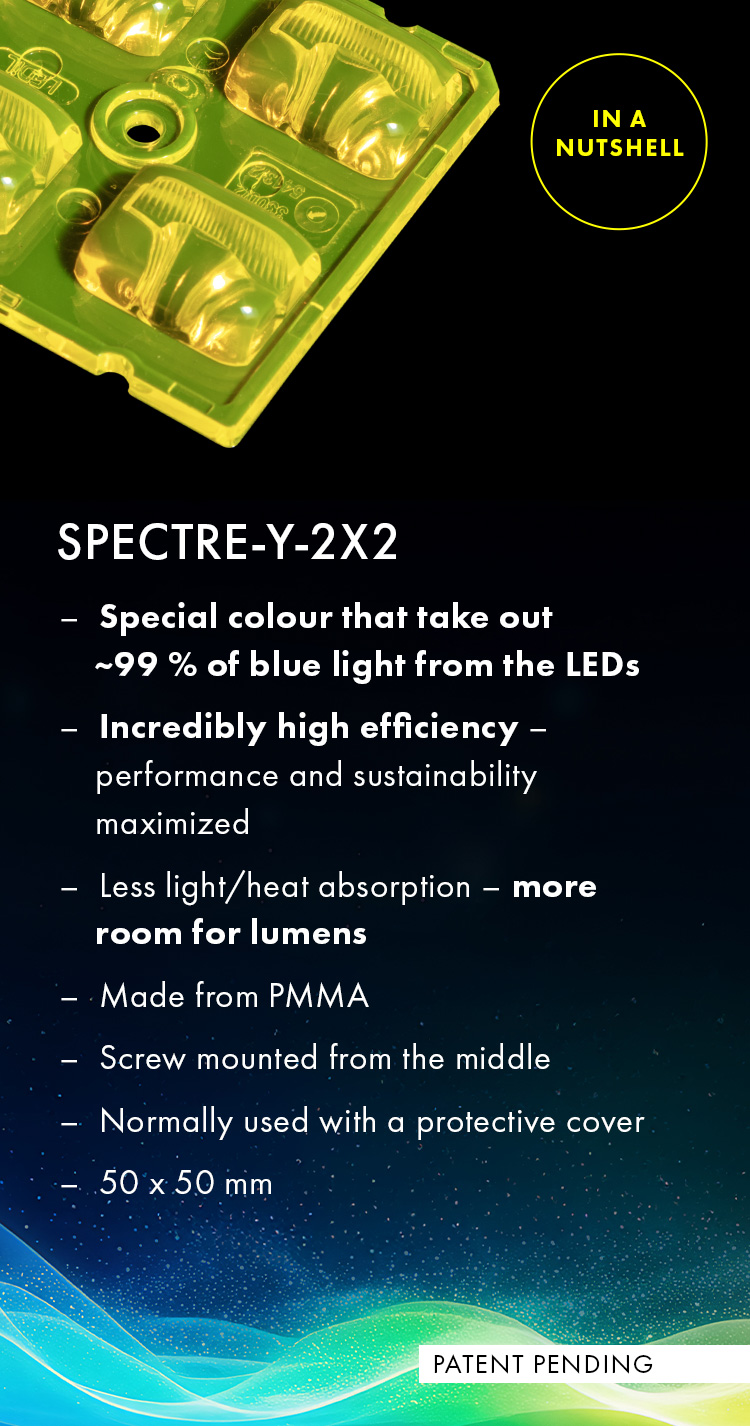
SPECTRE – Eliminate blue light, with efficiency you won’t believe
LEDiL’s next step in optical innovations
What if you could take out the harmful blue light from white light LEDs
– without practically losing efficiency?
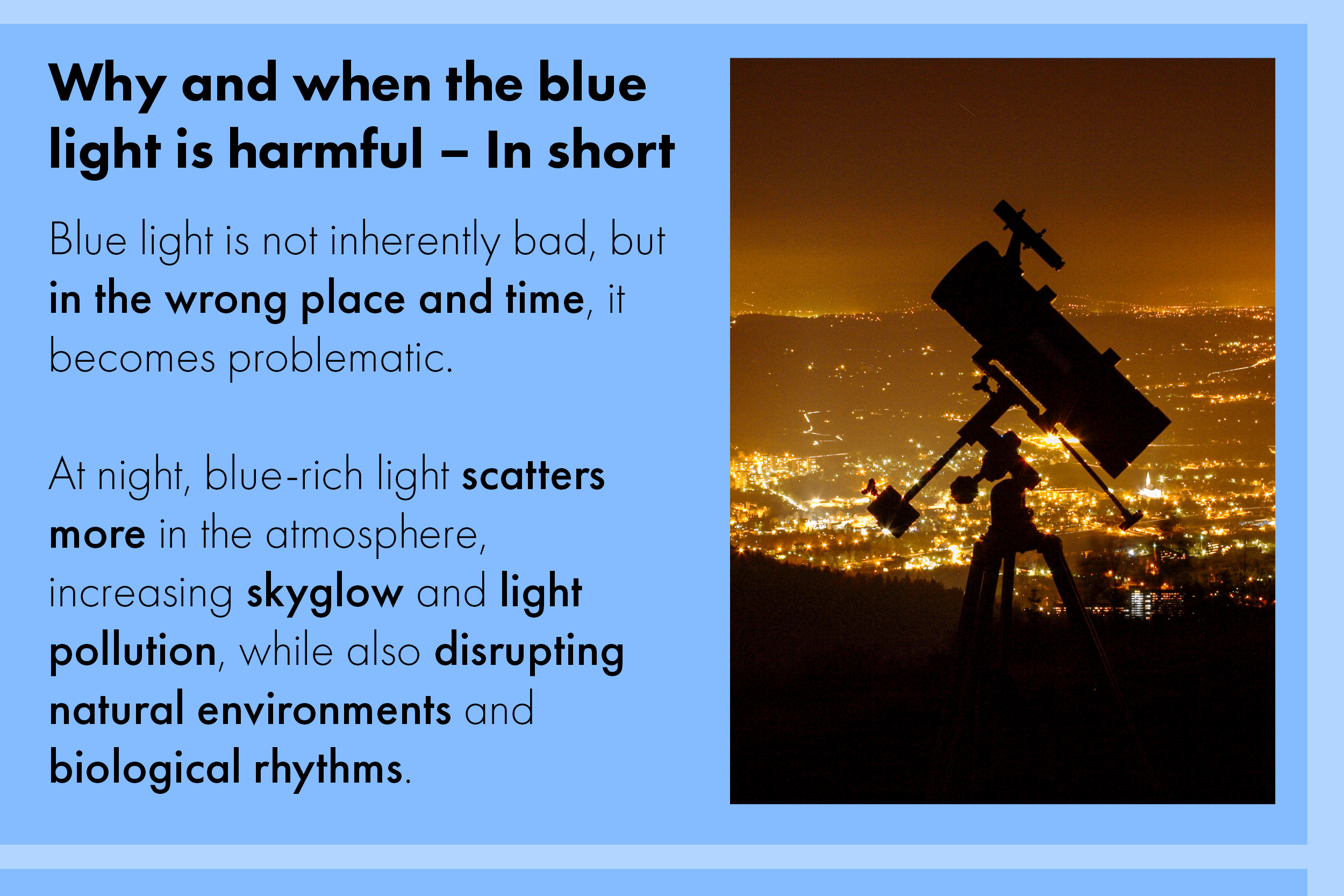
Learn more: See the stars in the centre of the city
Bold claims require extraordinary results
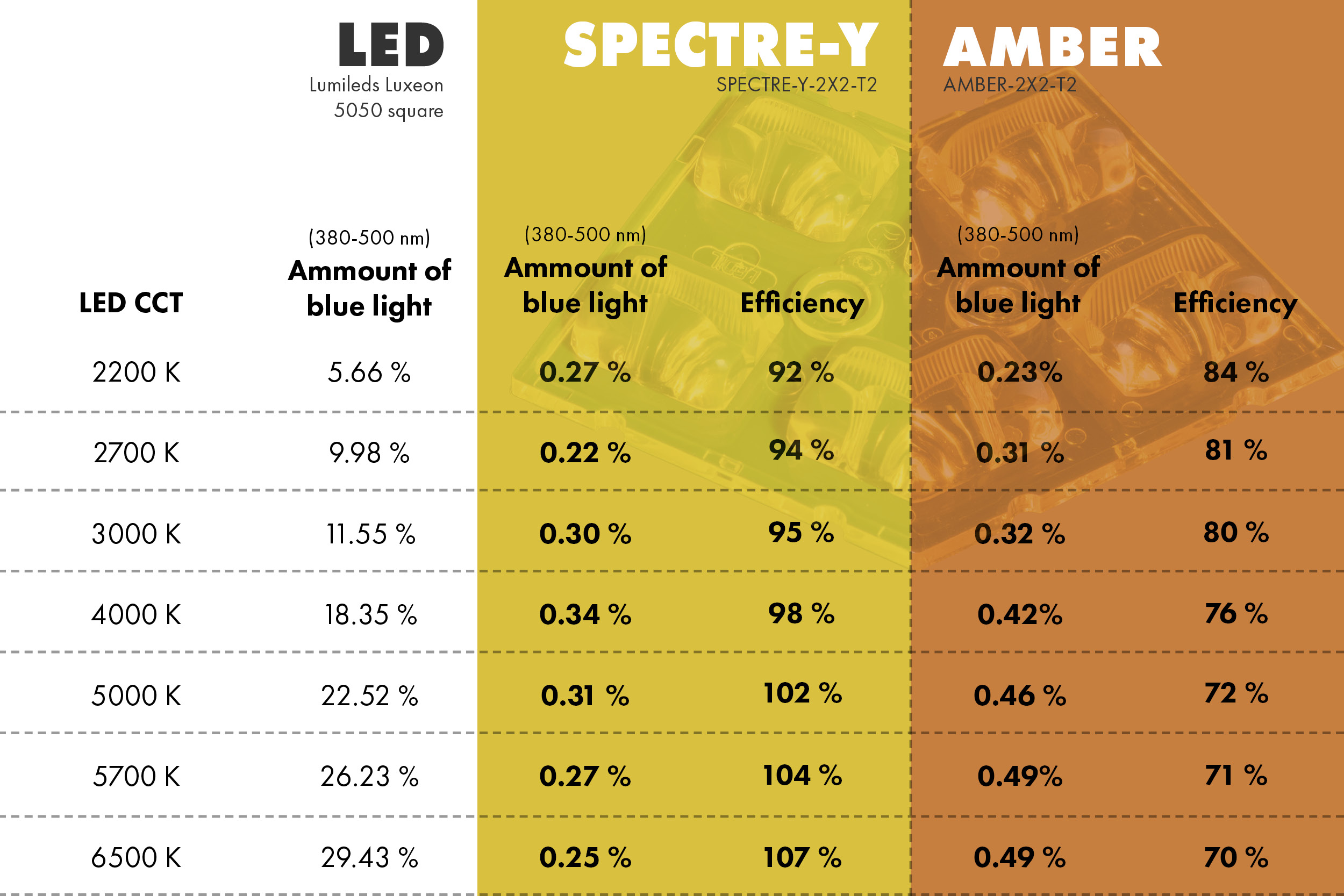
With SPECTRE-Y, you can take out the blue light almost completely, while the efficiency stays around at the same level as with bare LEDs.
Of course, the exact performance depends on the LED, its spectrum, and the selected light distribution, but below you can see results across different LED CCTs using the Lumileds Luxeon 5050 square and the SPECTRE-Y-2X2-T2.
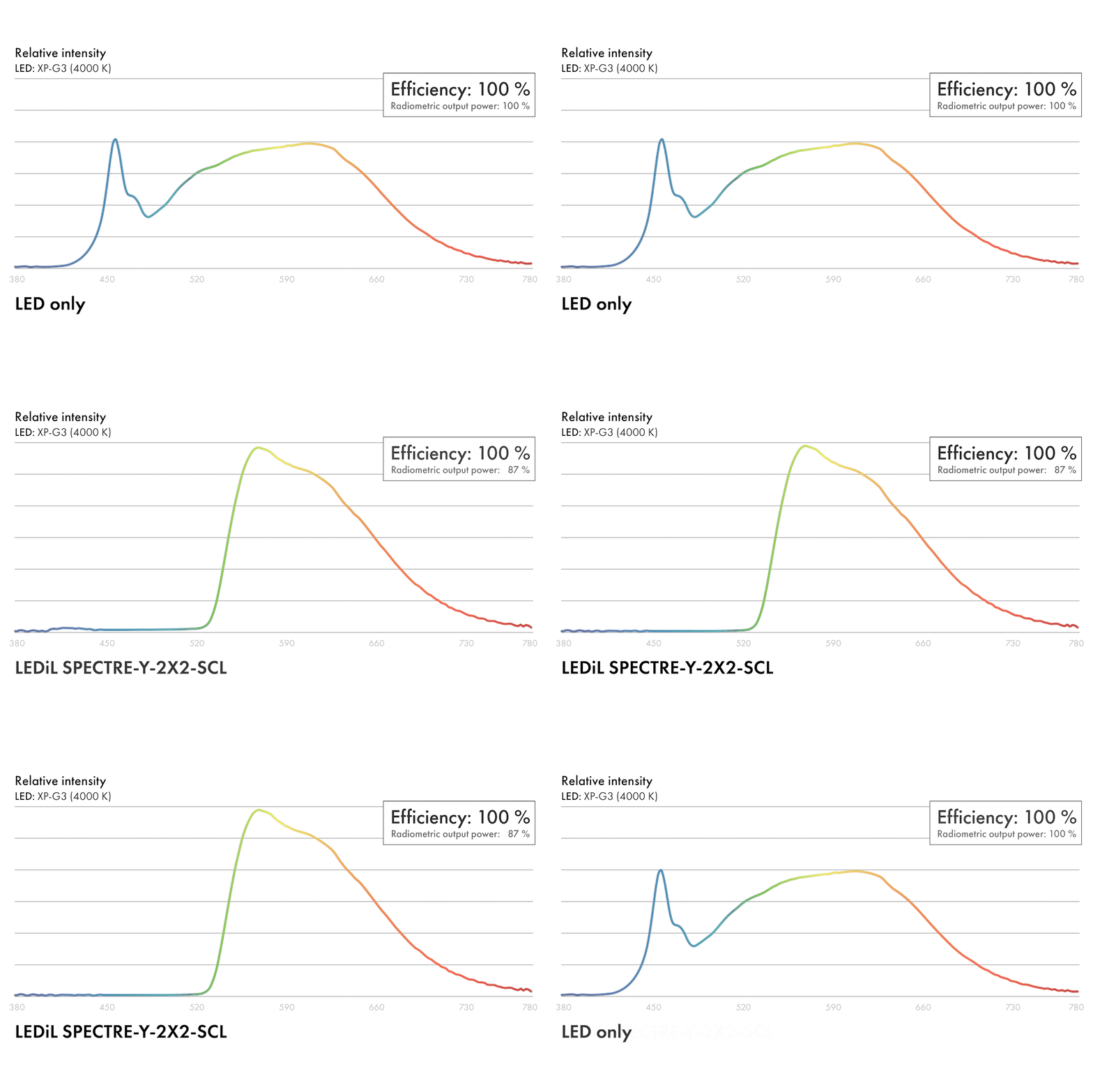
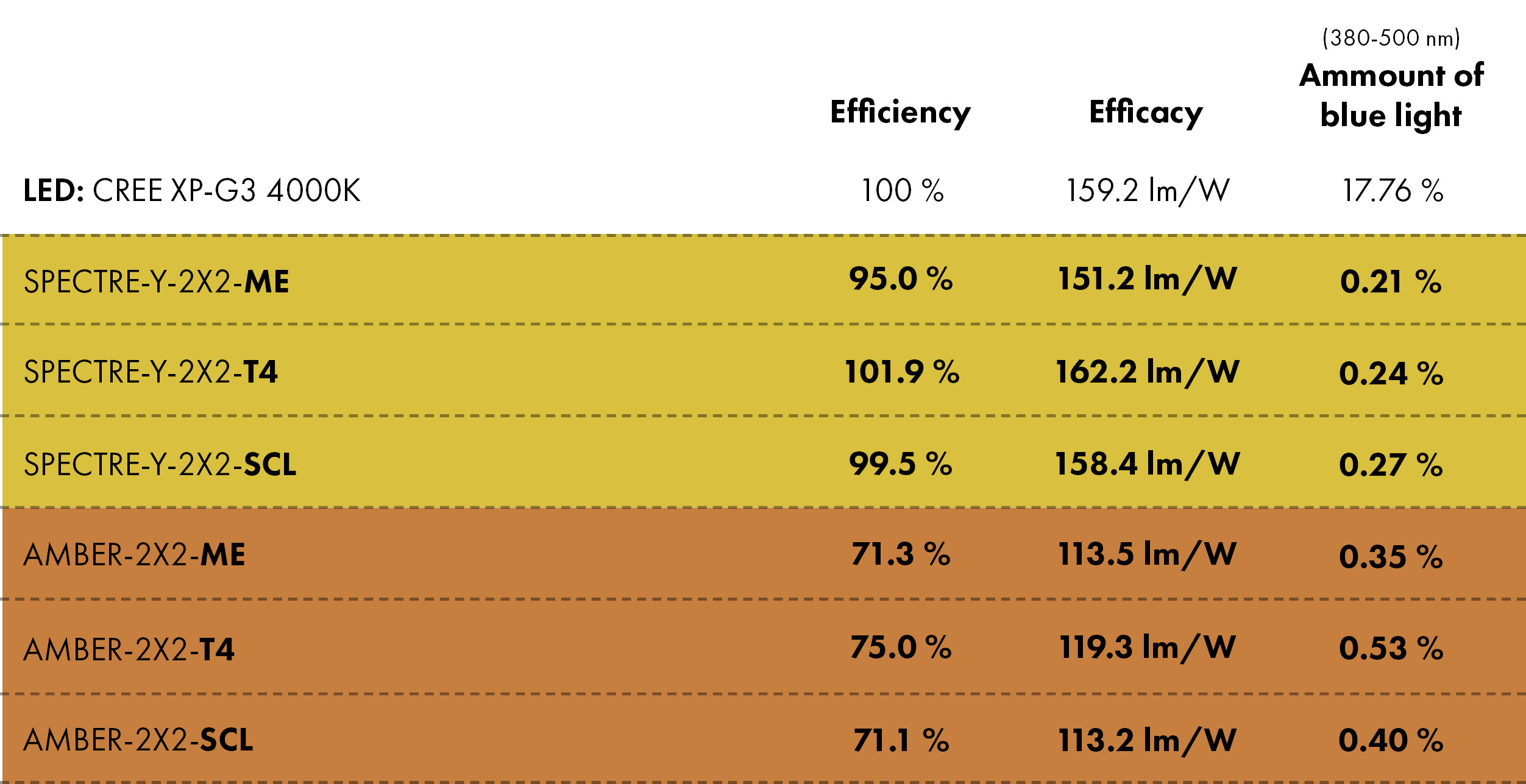
And a few more light distributions with XP-G3 4000K.
When to still use AMBER? See comparison at the end of this page.
What? – You may ask…
Reducing blue light has typically meant reduced lumens. Even with traditional clear optics lumen output is already lower. So how can SPECTRE-Y achieve close to 100% efficiency, or even exceed it?
We measure lighting in lumens, based on how the human eye responds to different wavelengths of light, with peak sensitivity in green (555 nm). Light consists of photons, and shorter wavelengths carry more energy, so blue photons have higher energy per photon. With AMBER, the blue part of the spectrum is blocked, while with SPECTRE-Y it is reshaped. Instead of absorbing energy, the light is redistributed toward wavelengths where the eye is more sensitive.
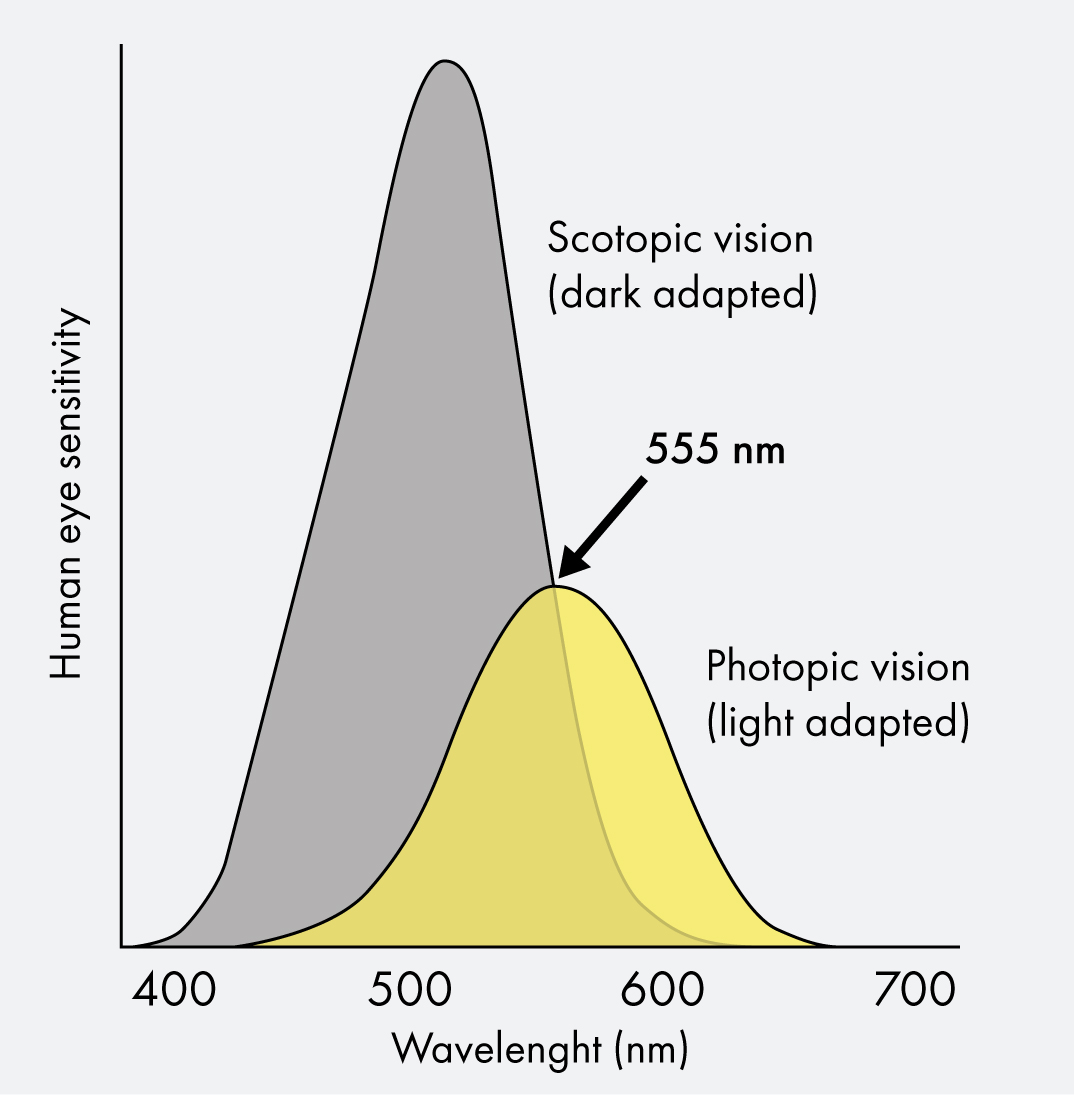
While some energy is lost in radiometric terms, the emitted light contributes to more usable lumens (lm/W) in real applications.
This is spectral control.
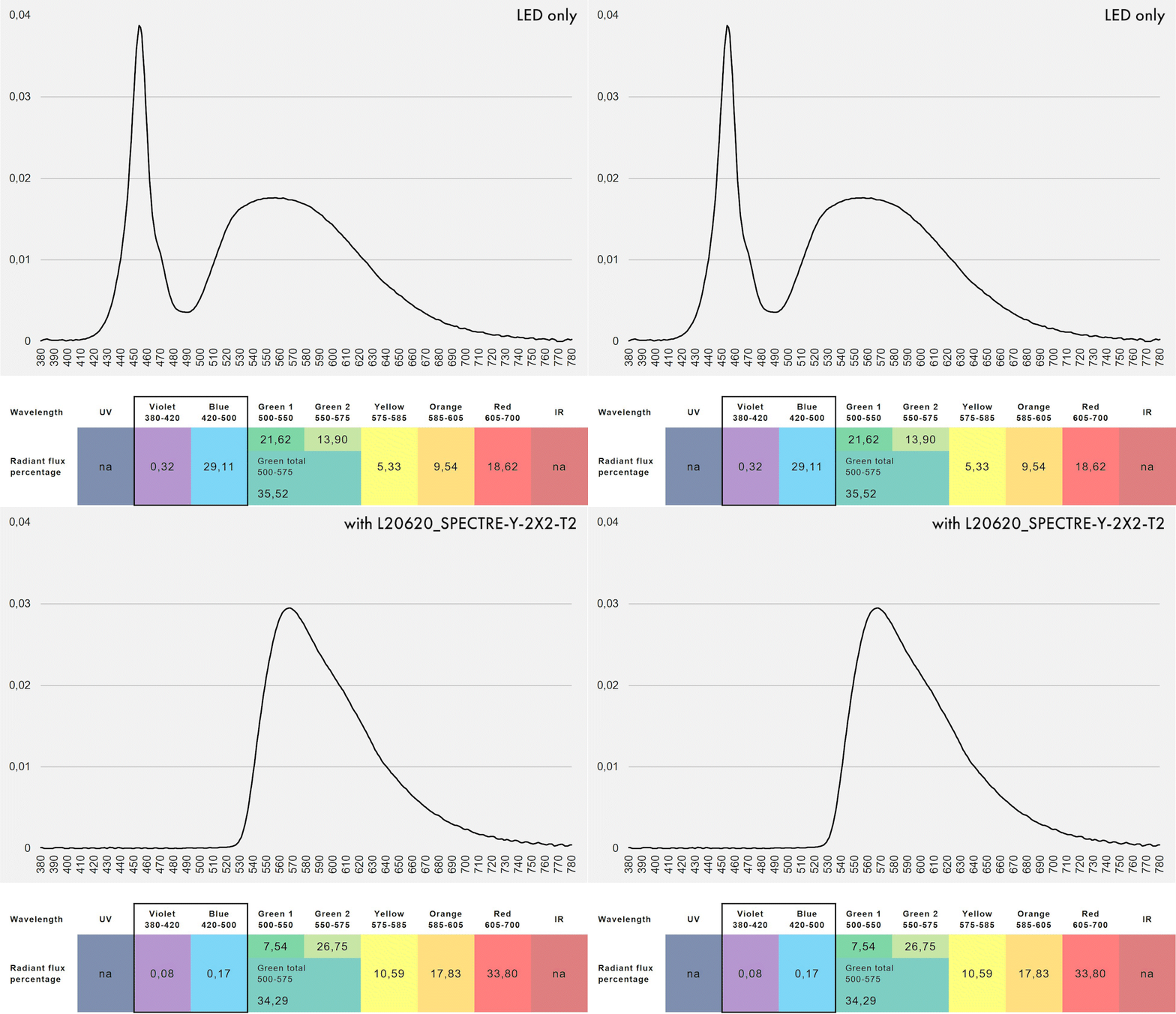
Below are detailed results showing the CCT, light colour and the spectral changes across different CCT LEDs and the corresponding radiant flux distribution.
Please note that the light distribution may also vary slightly depending on the selected LED CCT. Detailed optical results and IES files are available on the individual product pages.
CCT changes*
* due to the elimination of blue light, the measured CCT doesn’t follow the Black Body Locus line
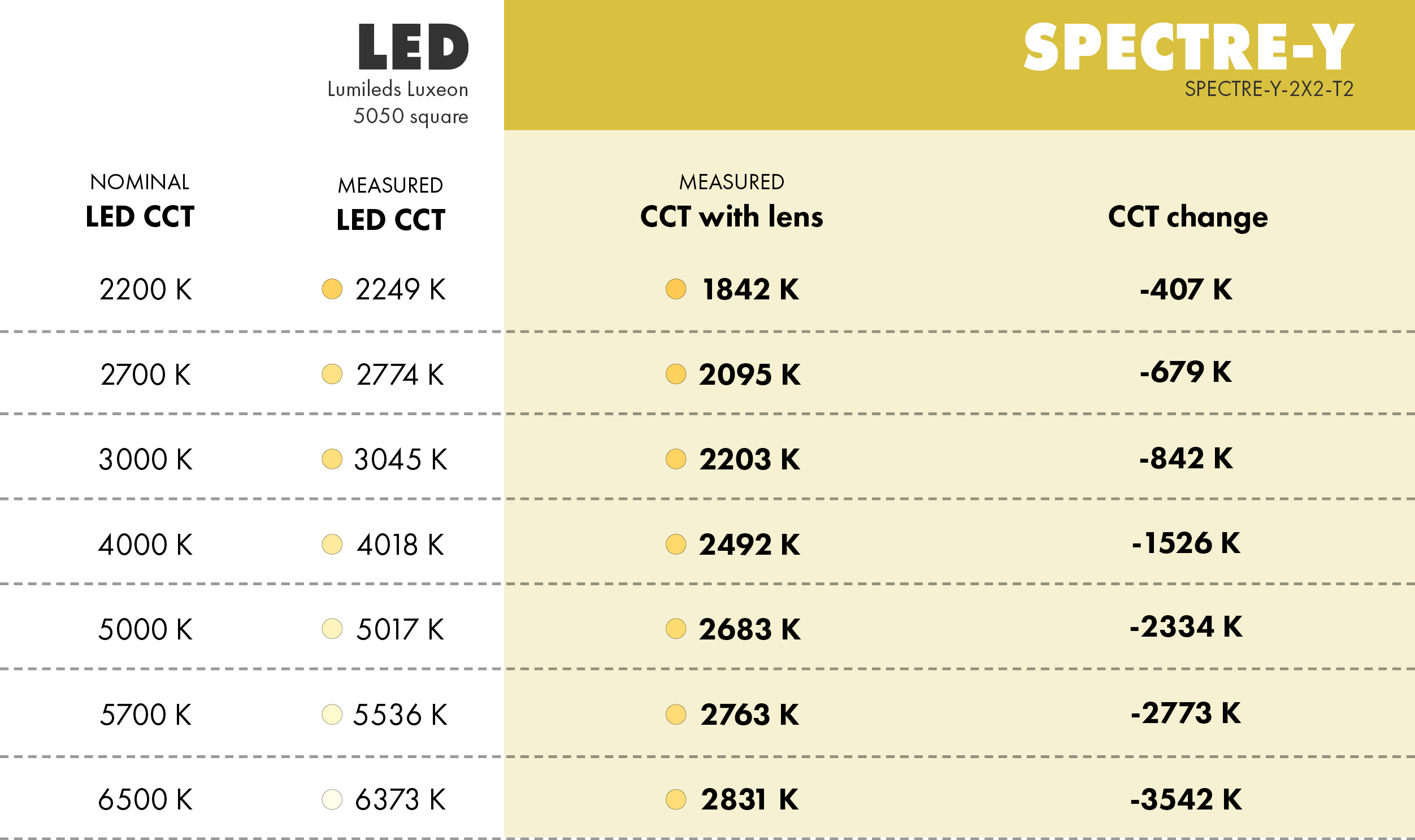
Light colour changes
| LED CCT | LED only | with SPECTRE-Y lens | Output CCT |
| 2200 K | 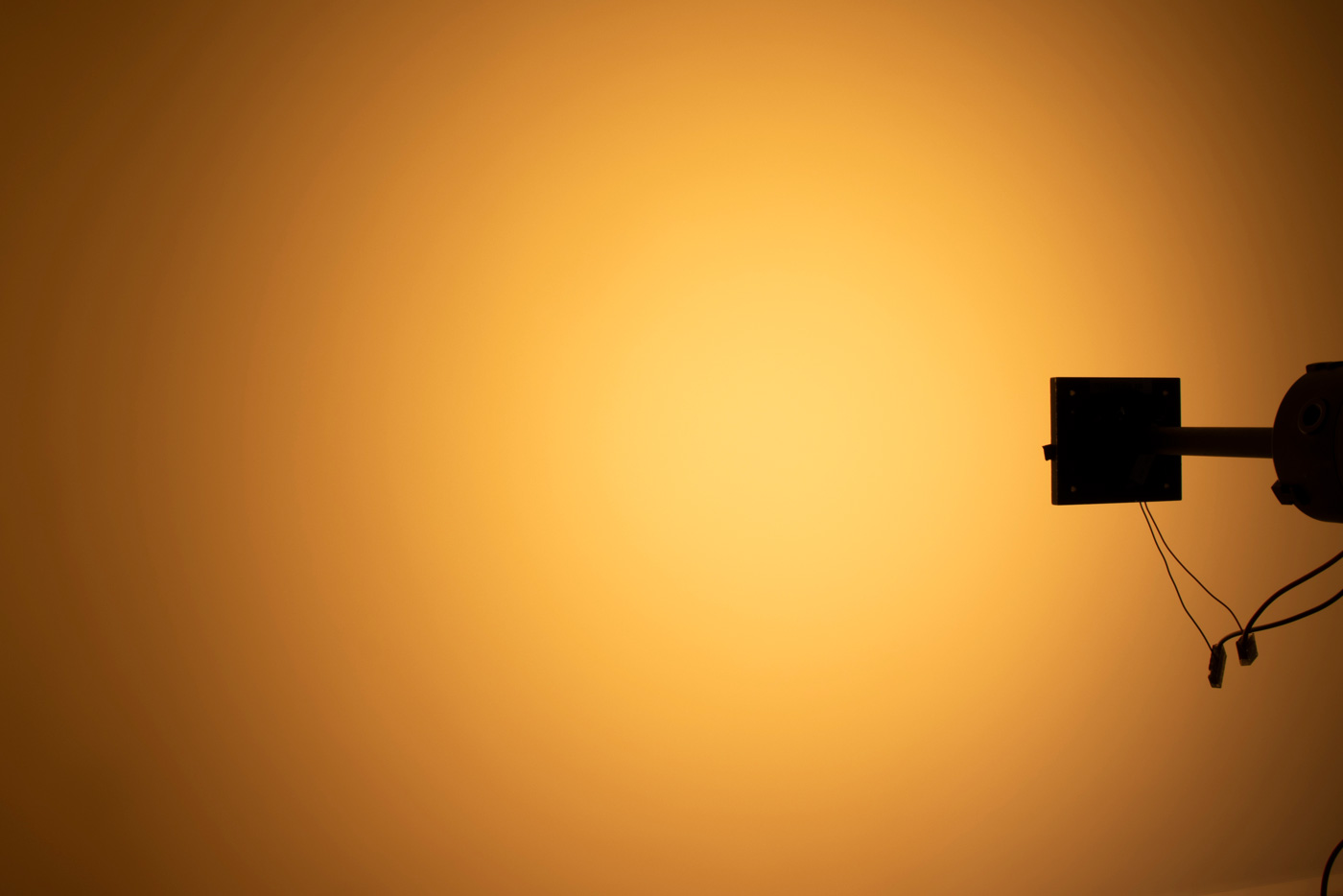 | 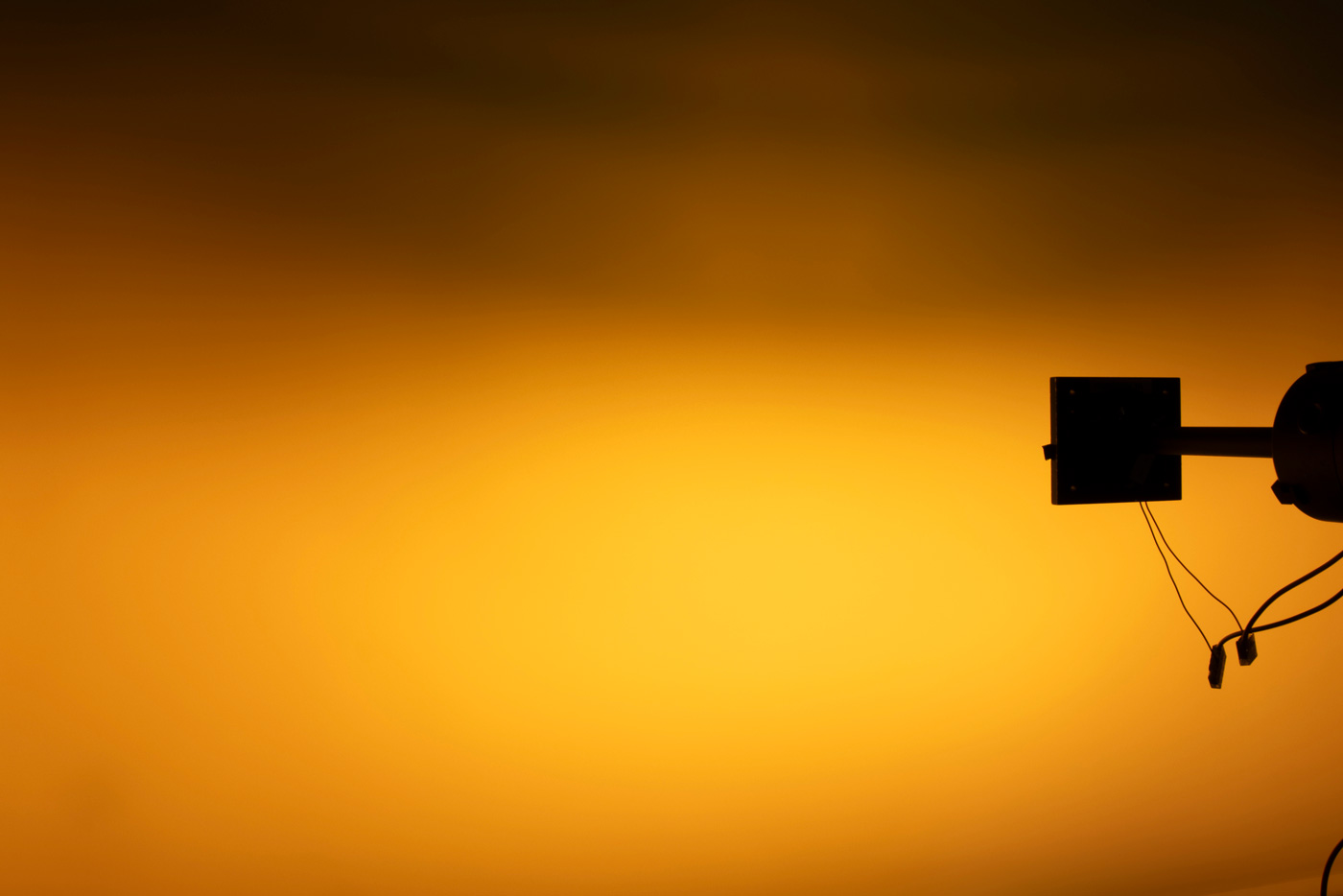 | 1850 K |
| 3000 K | 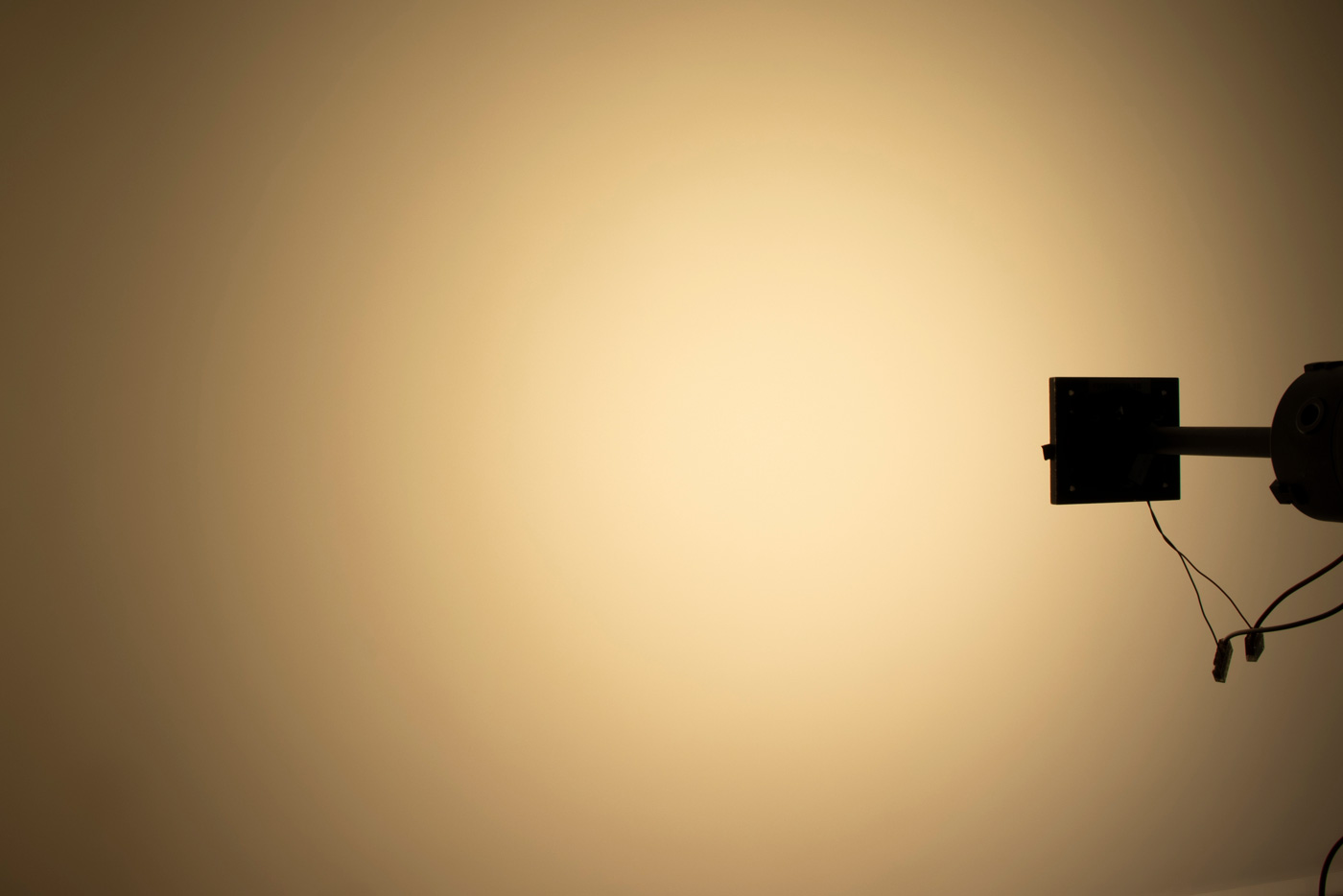 | 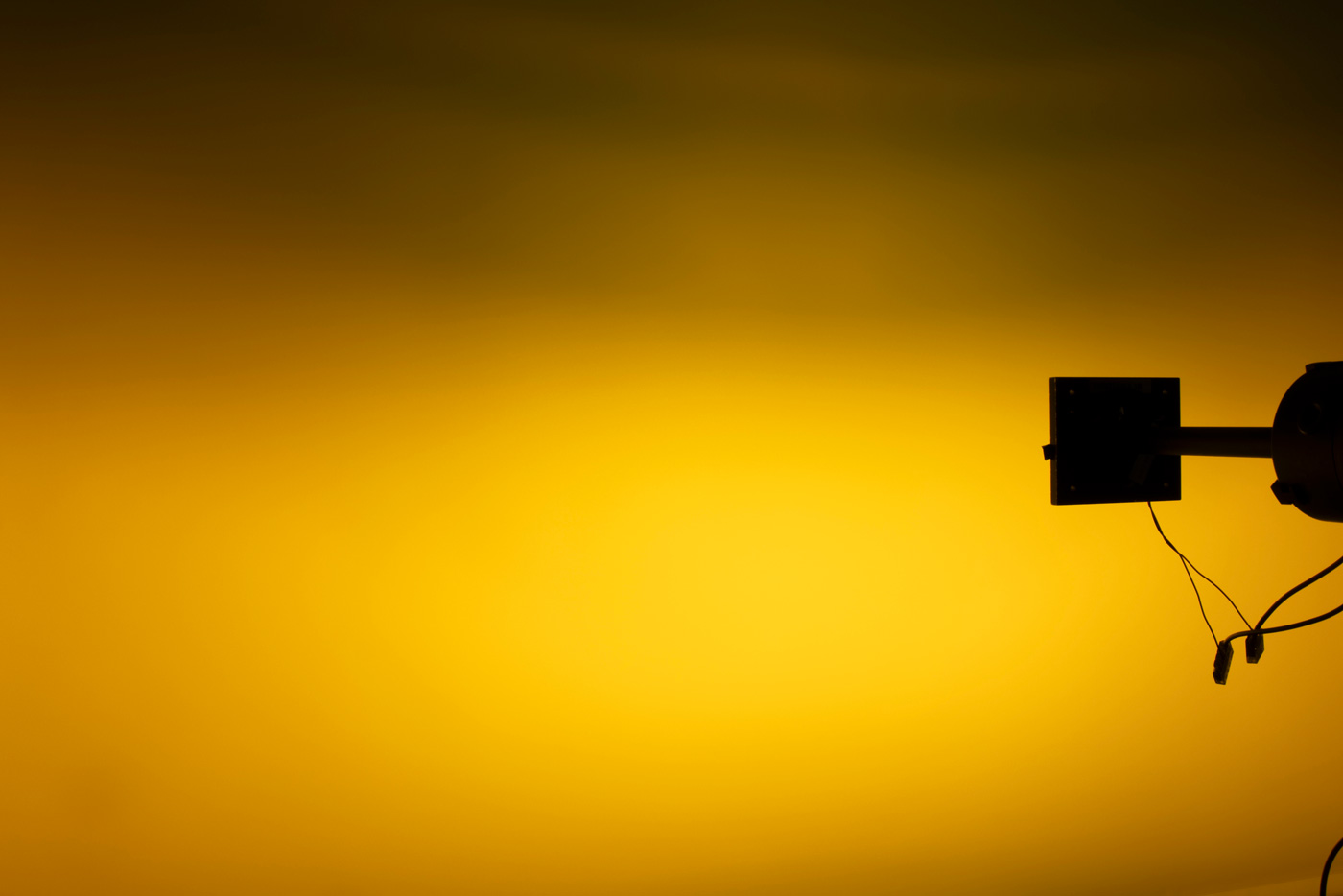 | 2200 K |
| 4000 K | 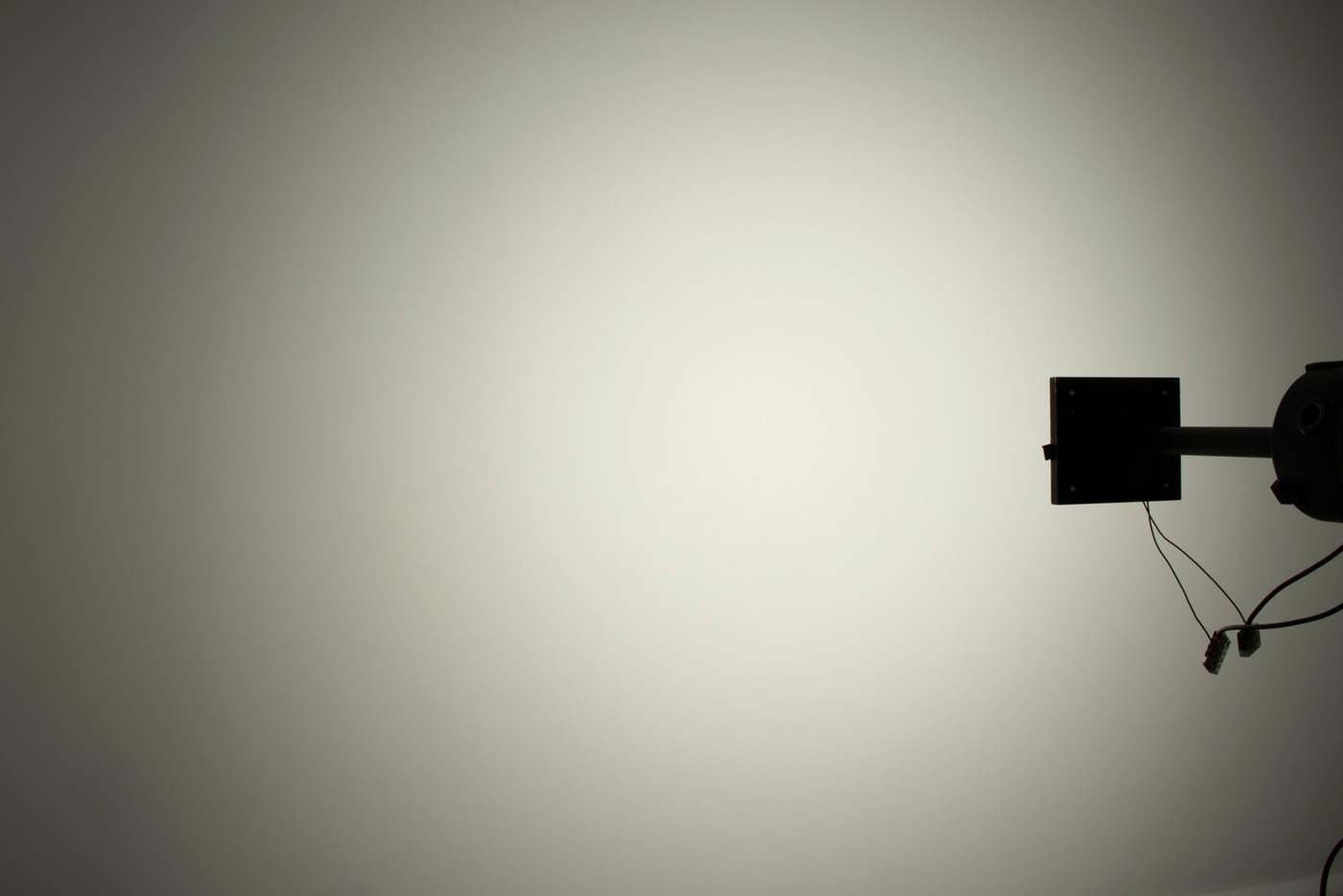 | 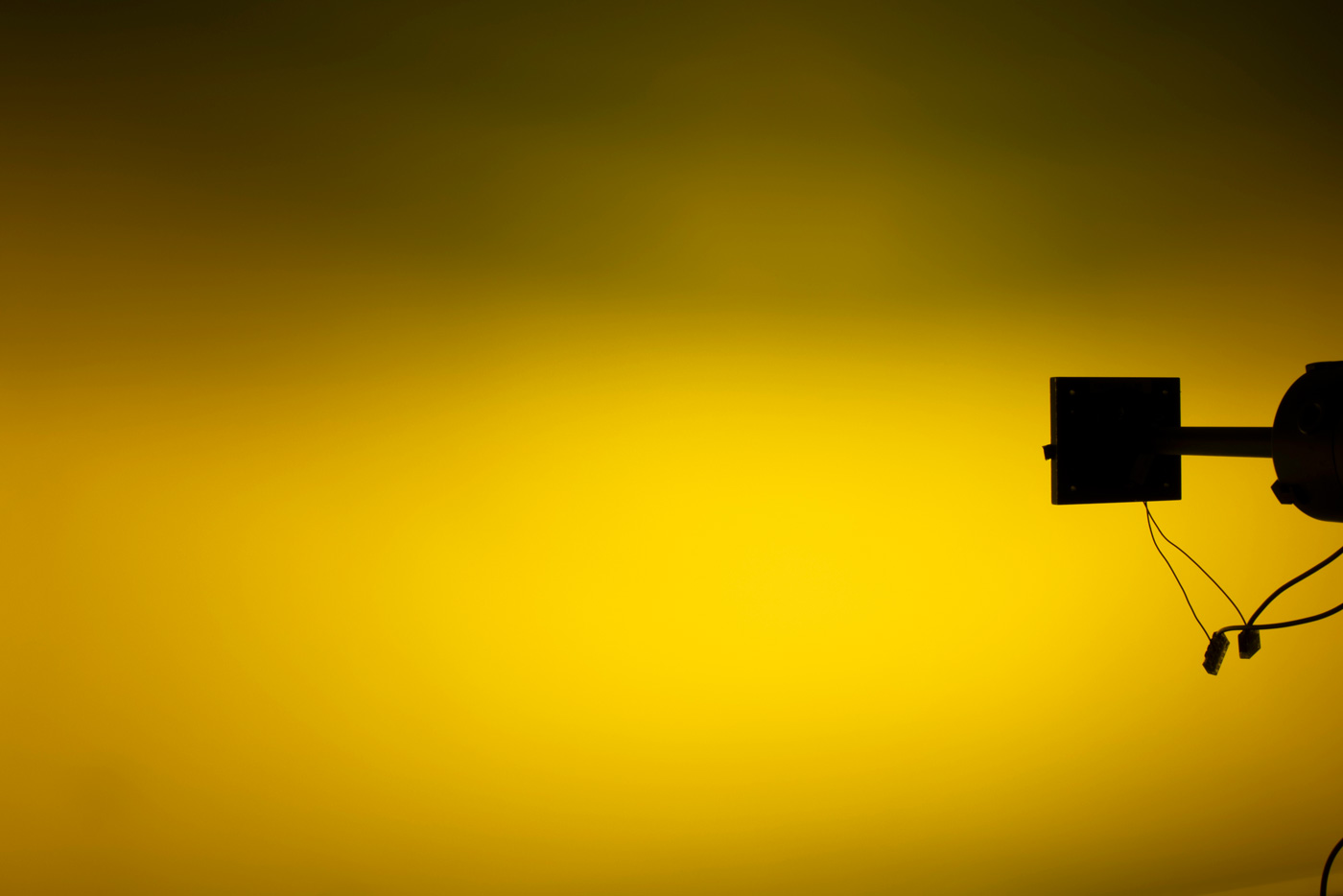 | 2500 K |
| 5000 K | 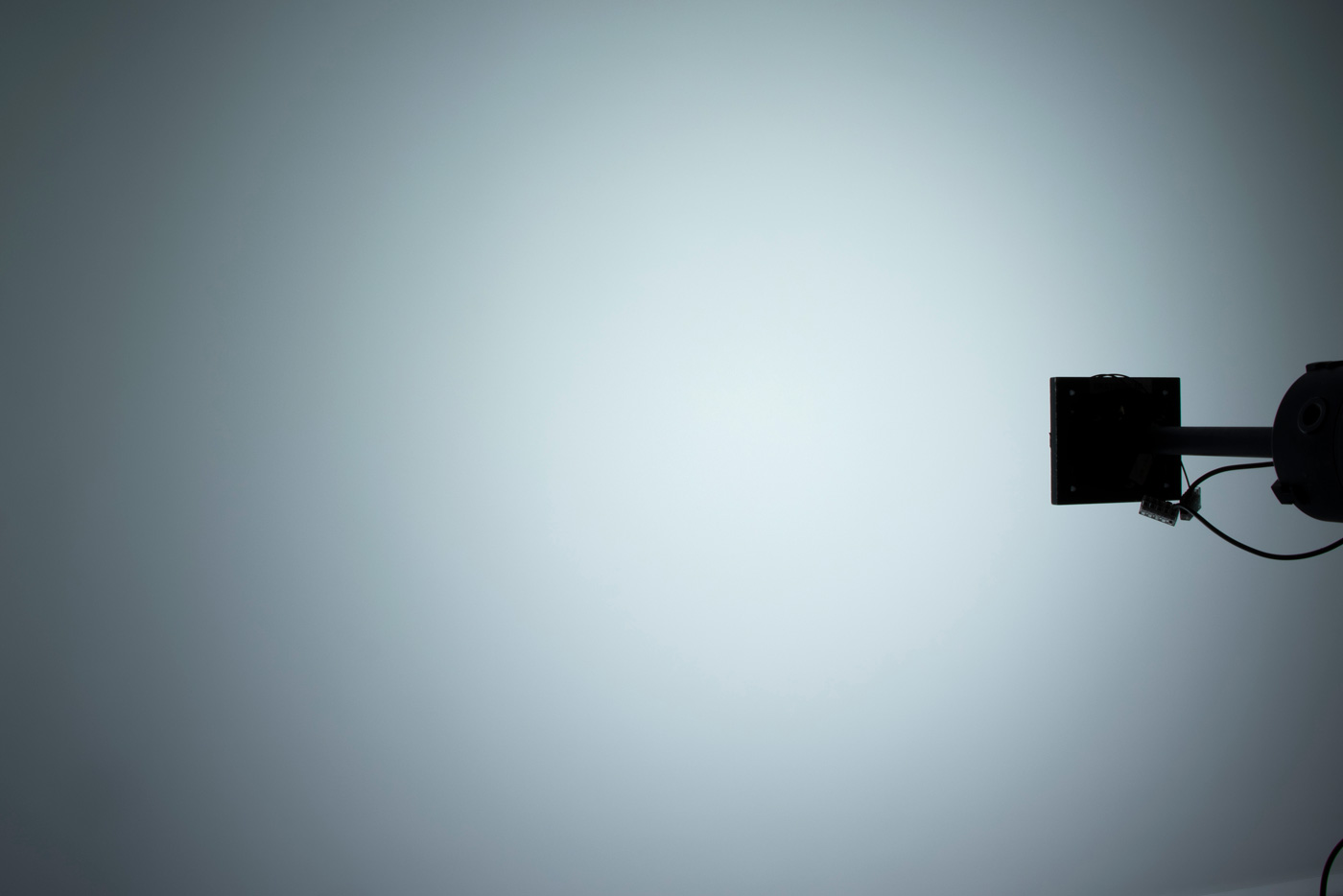 | 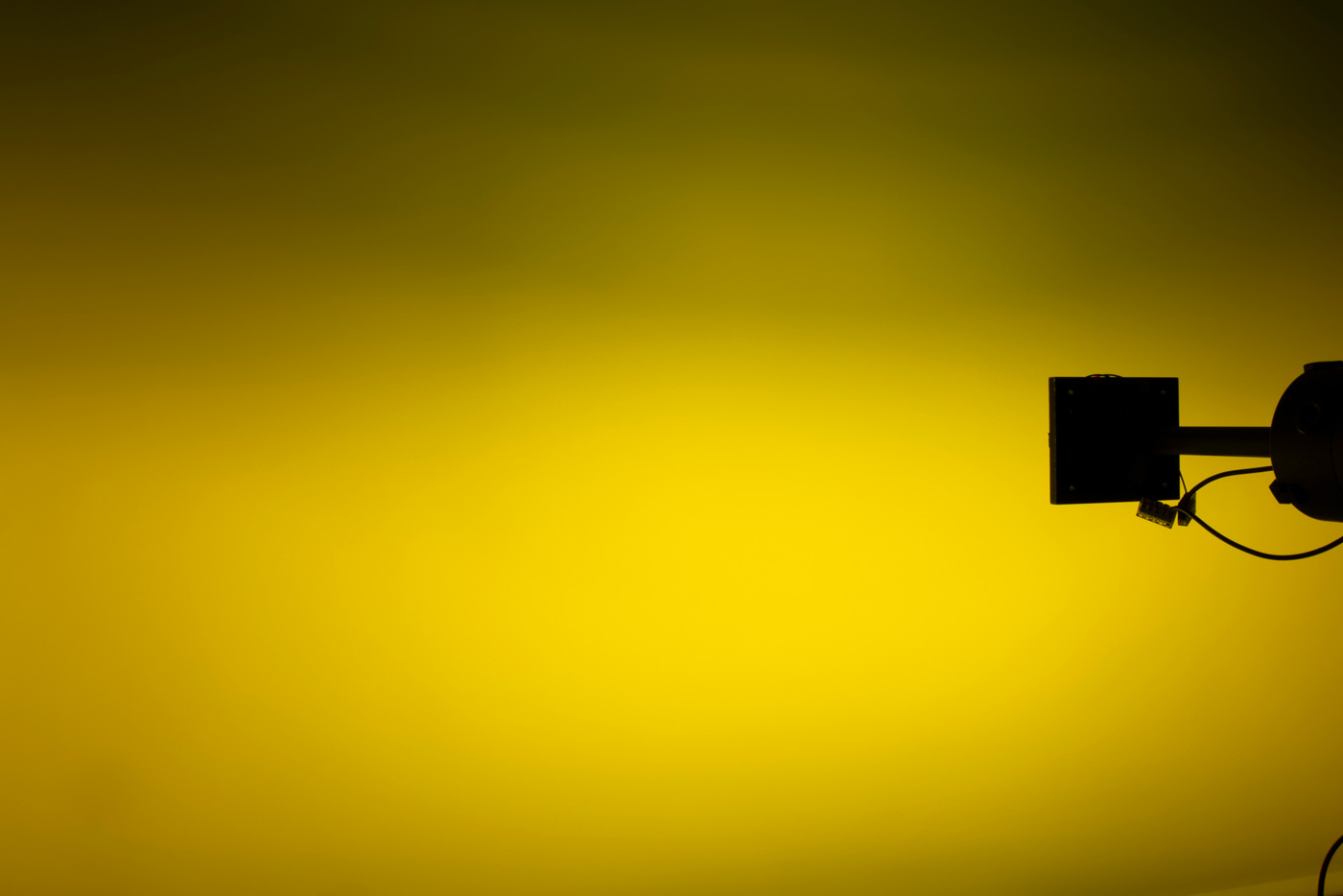 | 2700 K |
| 6500 K | 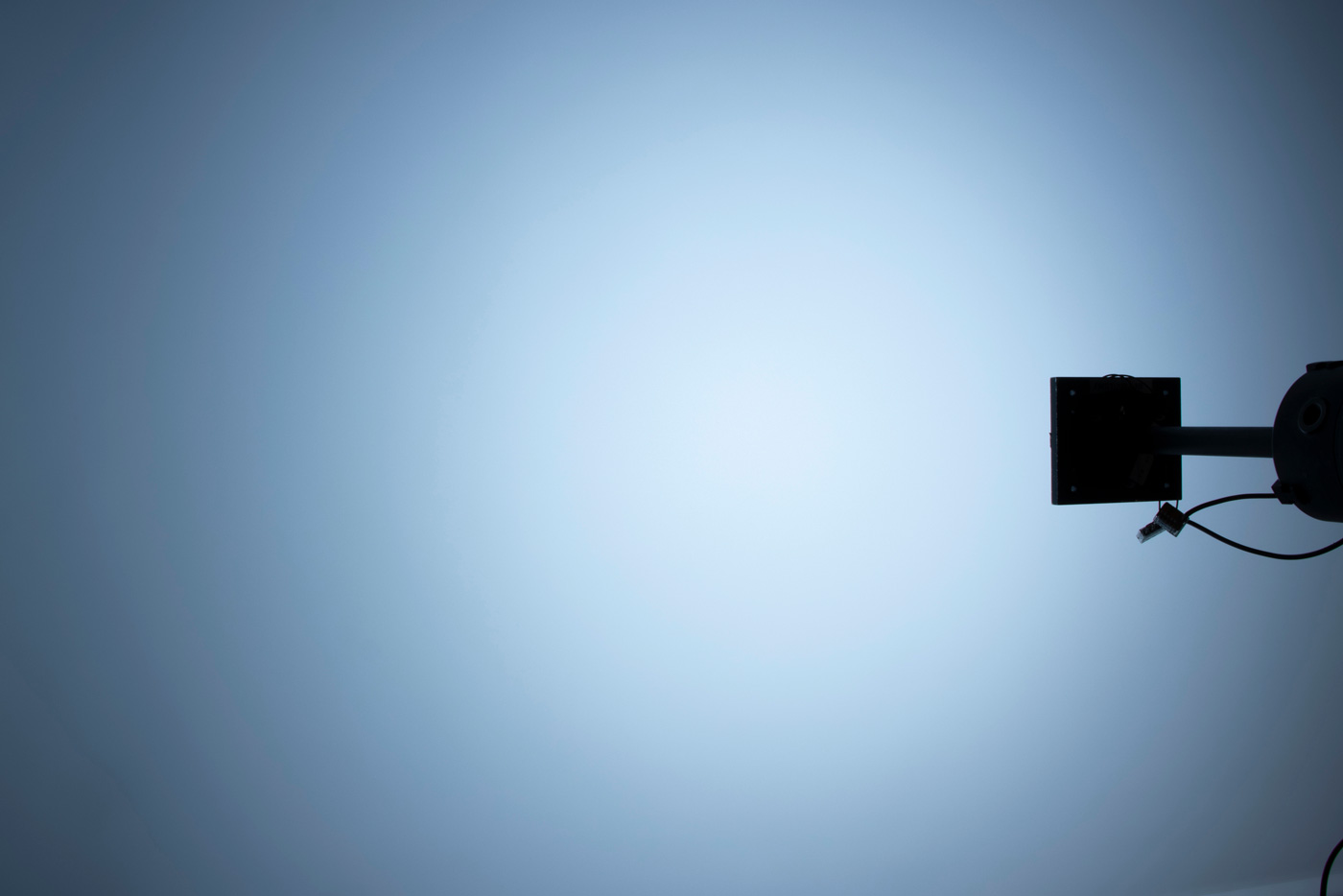 | 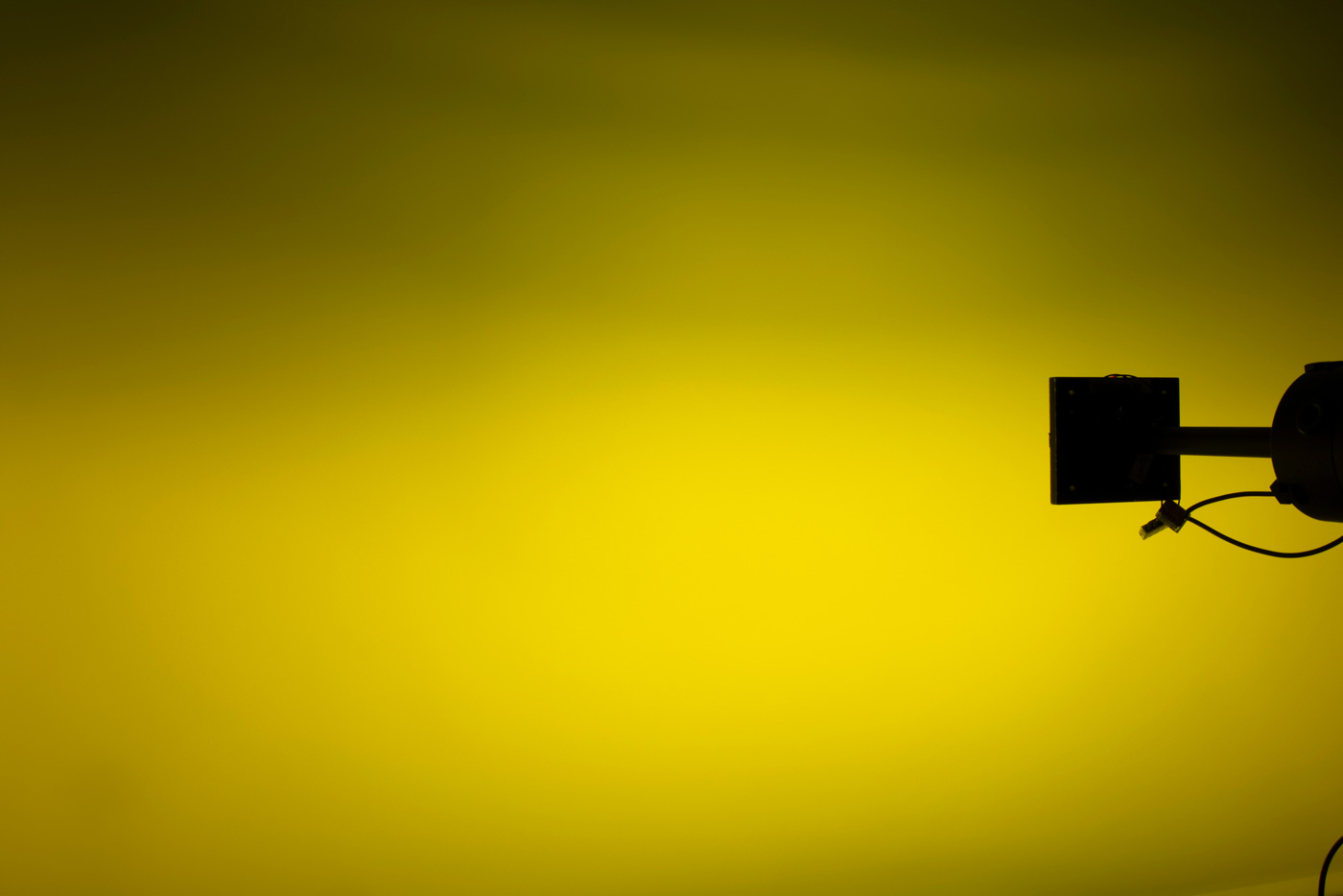 | 2800 K |
LED: Lumileds Luxeon 5050 square
Spectrum changes
SPECTRE-Y-2X2-T2 – Luxeon 5050 square 2200K
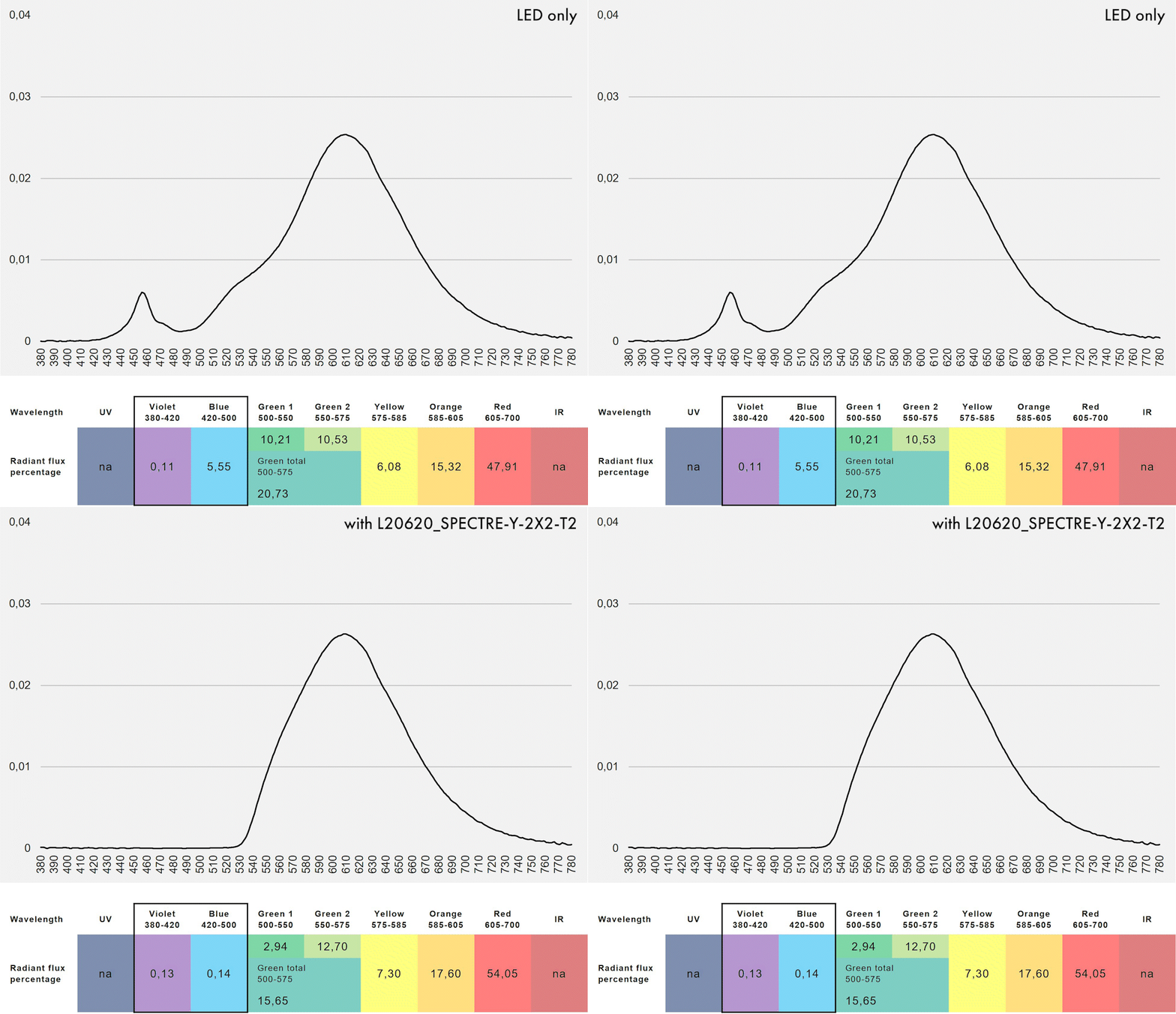
SPECTRE-Y-2X2-T2 – Luxeon 5050 square 2700K
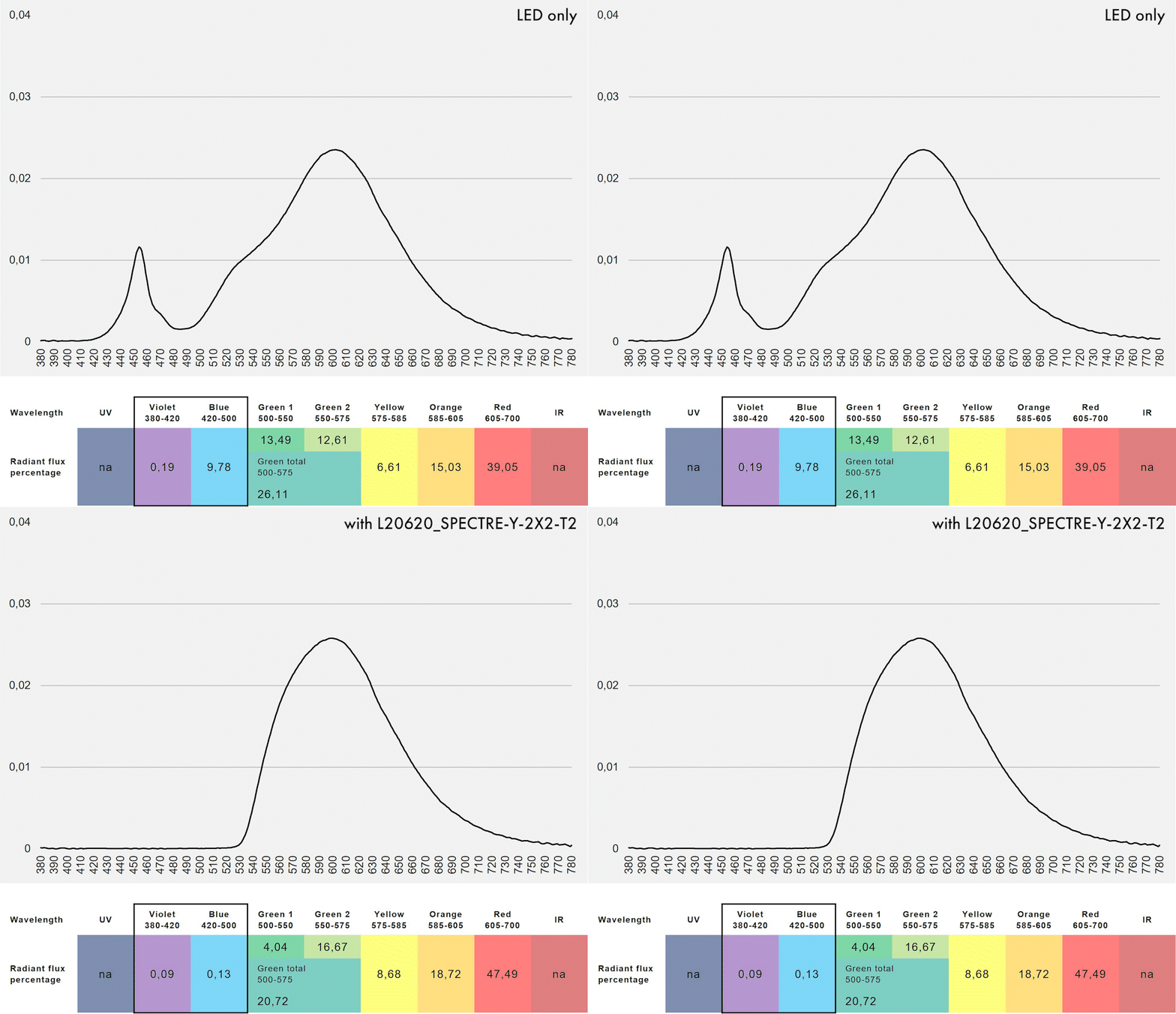
SPECTRE-Y-2X2-T2 – Luxeon 5050 square 3000K
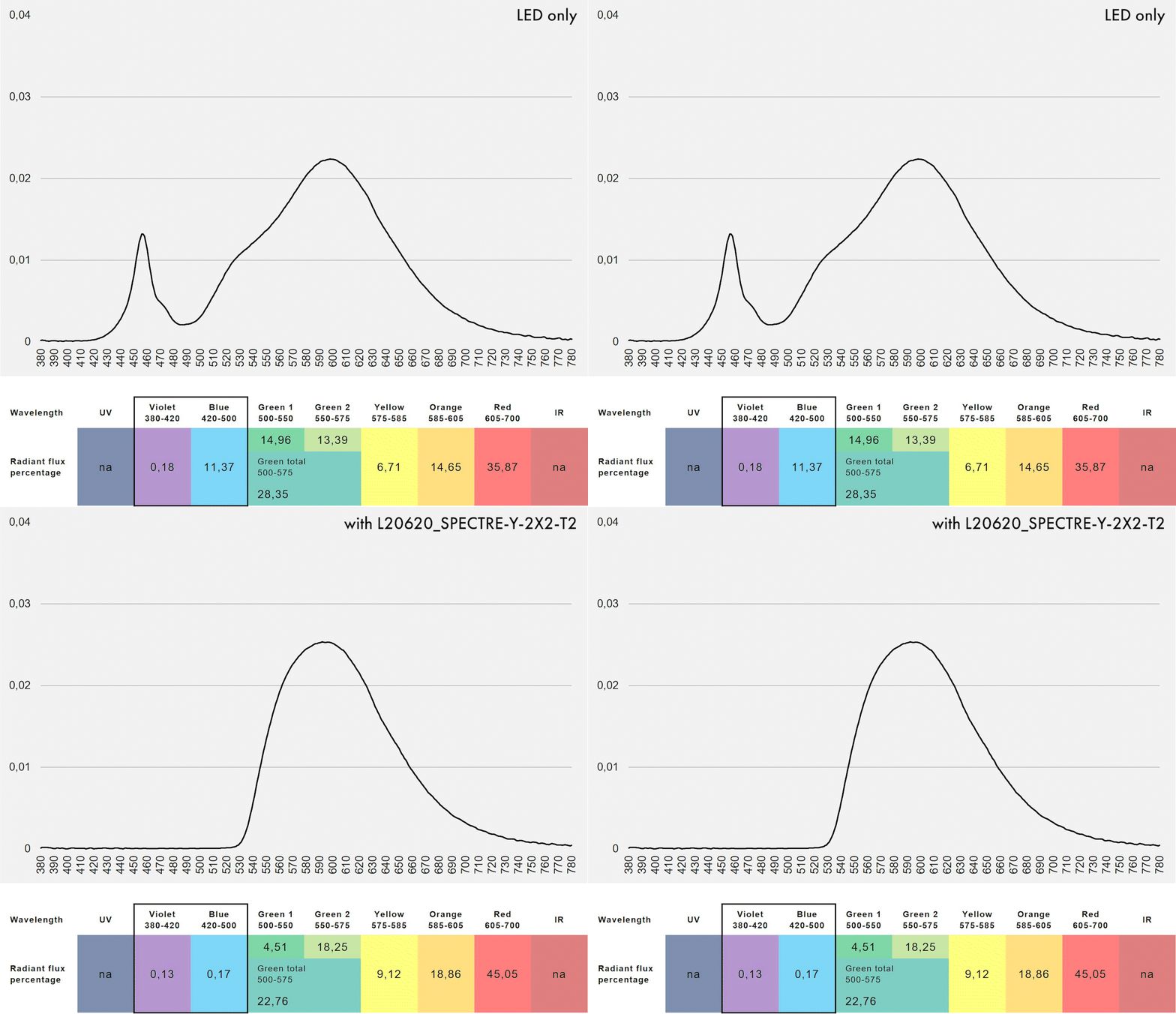
SPECTRE-Y-2X2-T2 – Luxeon 5050 square 4000K
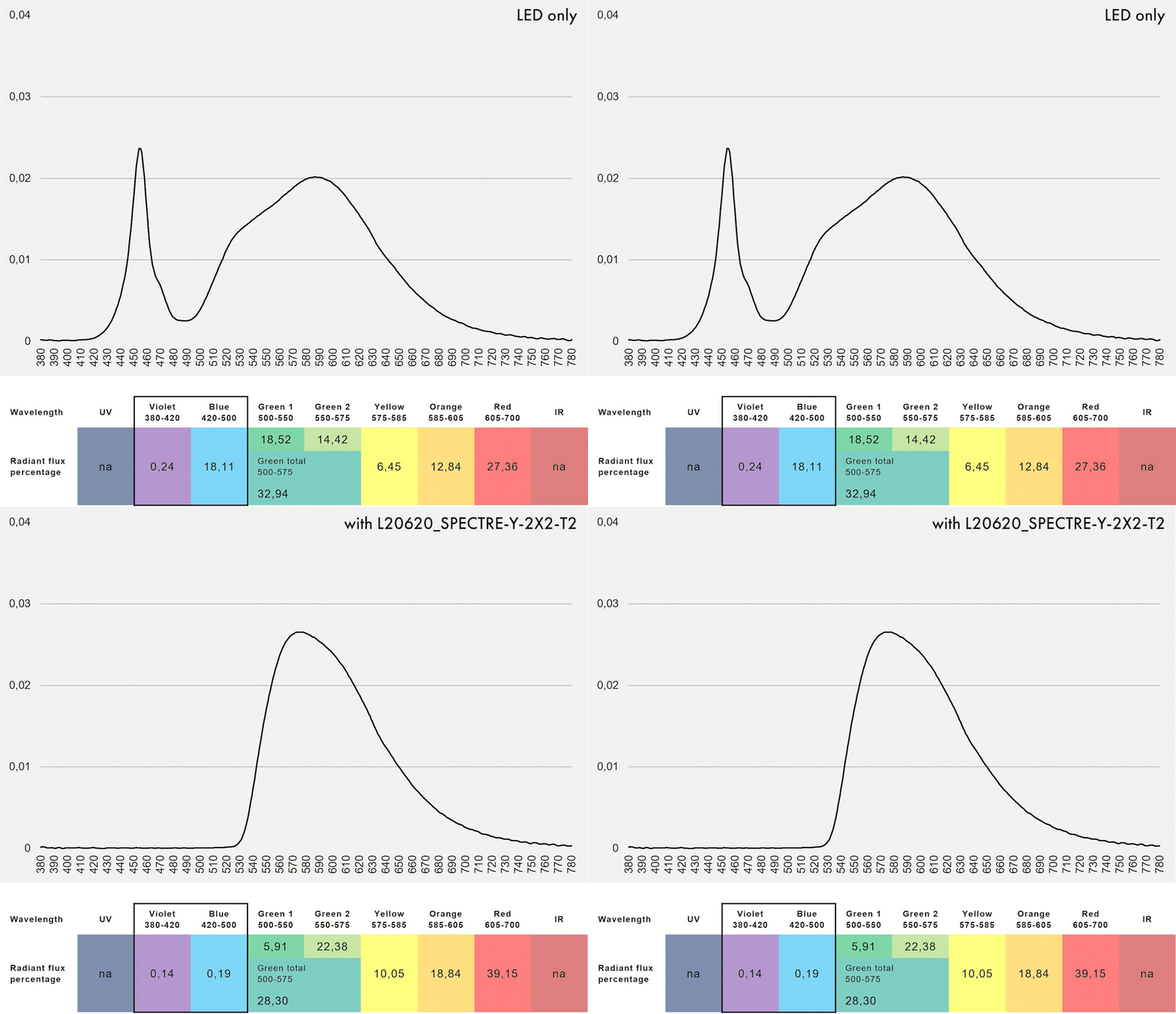
SPECTRE-Y-2X2-T2 – Luxeon 5050 square 5000K
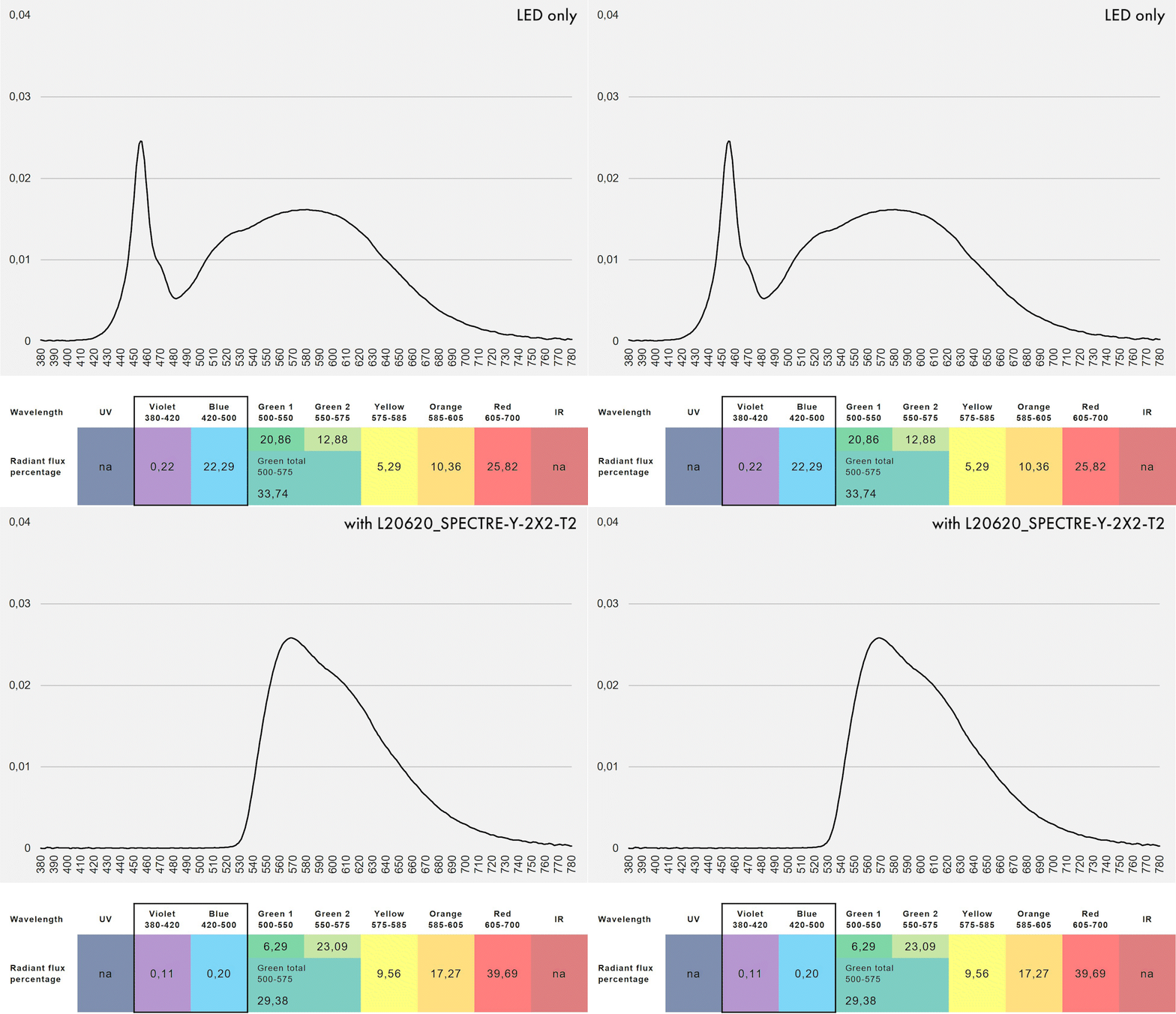
SPECTRE-Y-2X2-T2 – Luxeon 5050 square 5700K
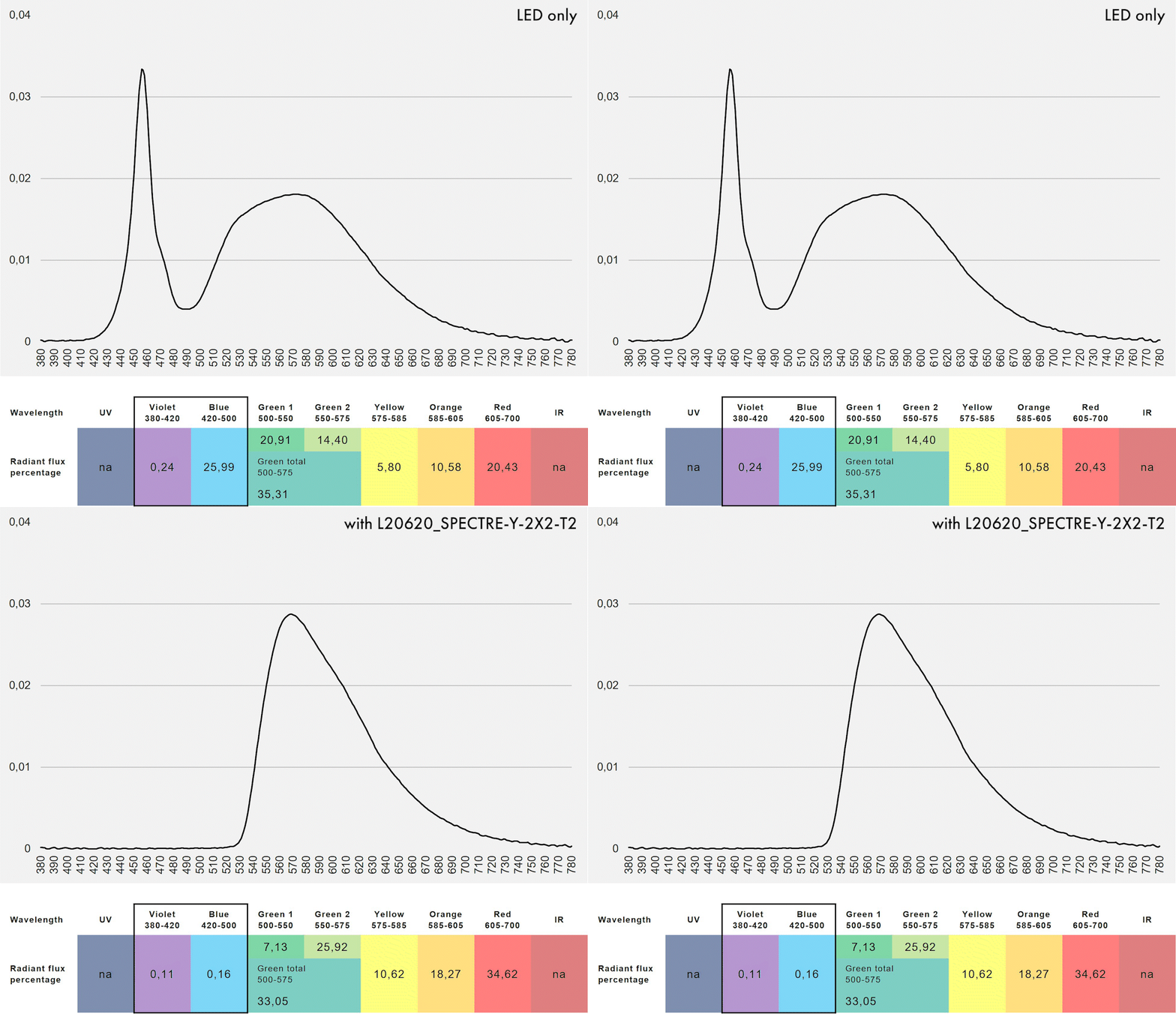
SPECTRE-Y-2X2-T2 – Luxeon 5050 square 6500K
Heat and durability
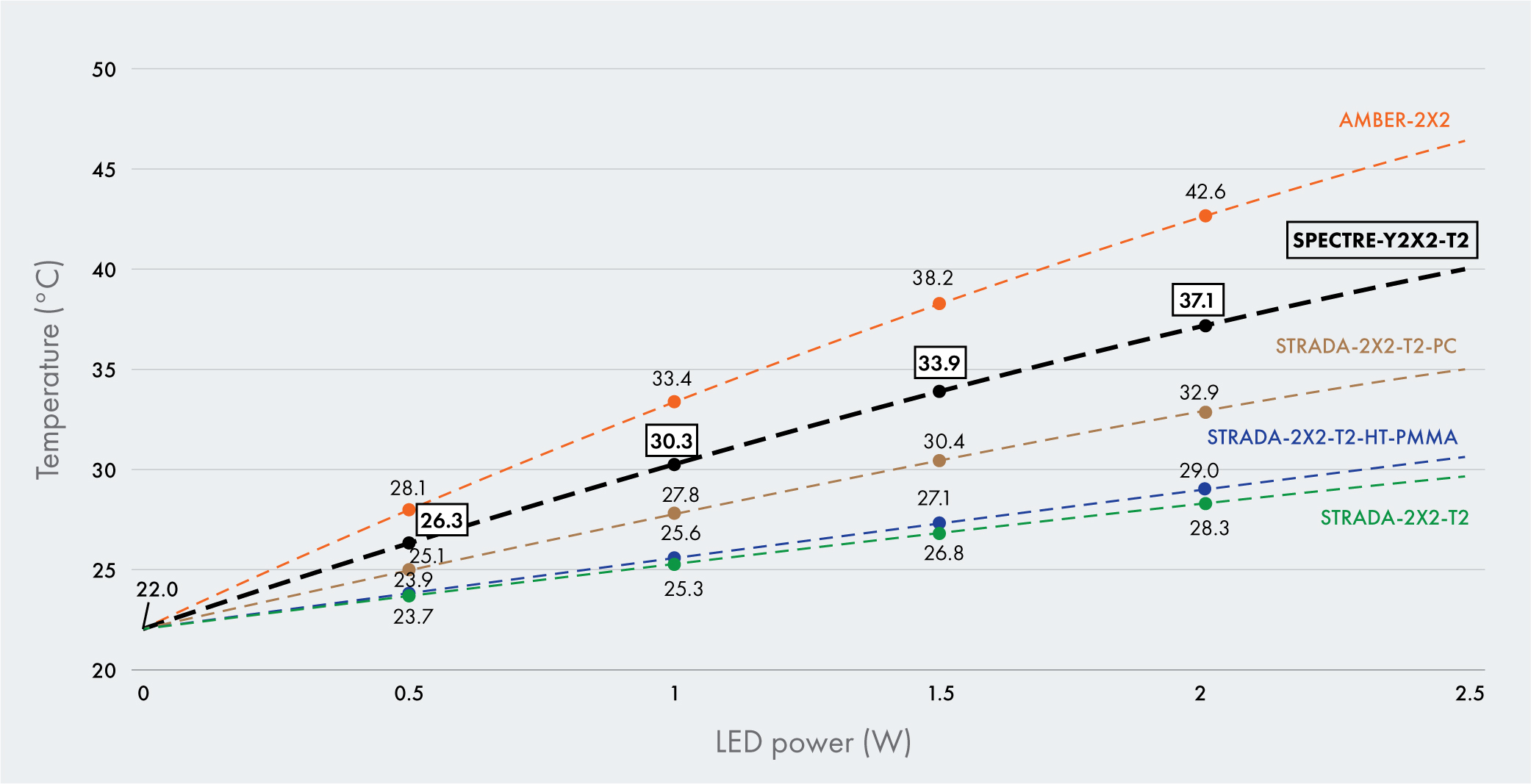
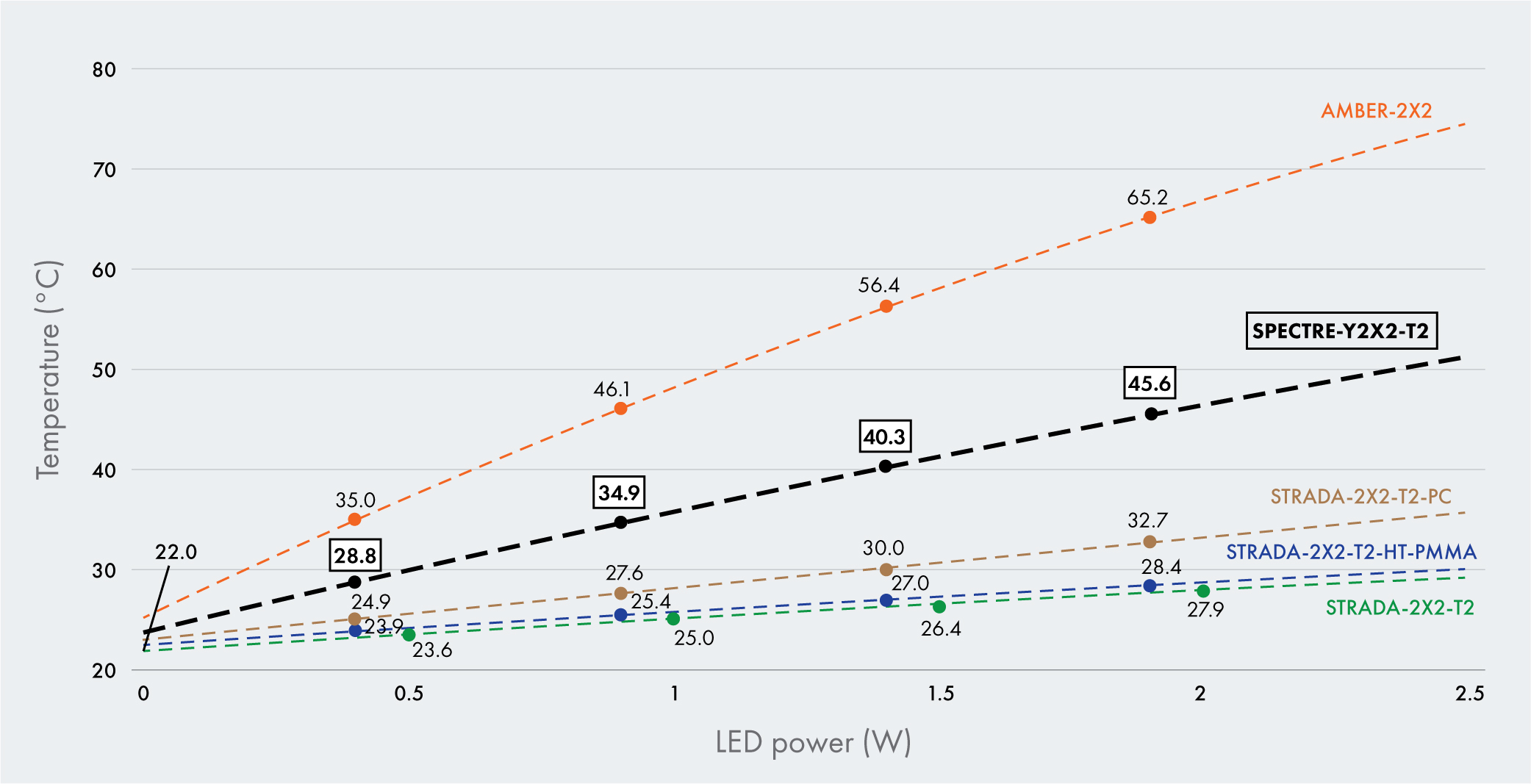
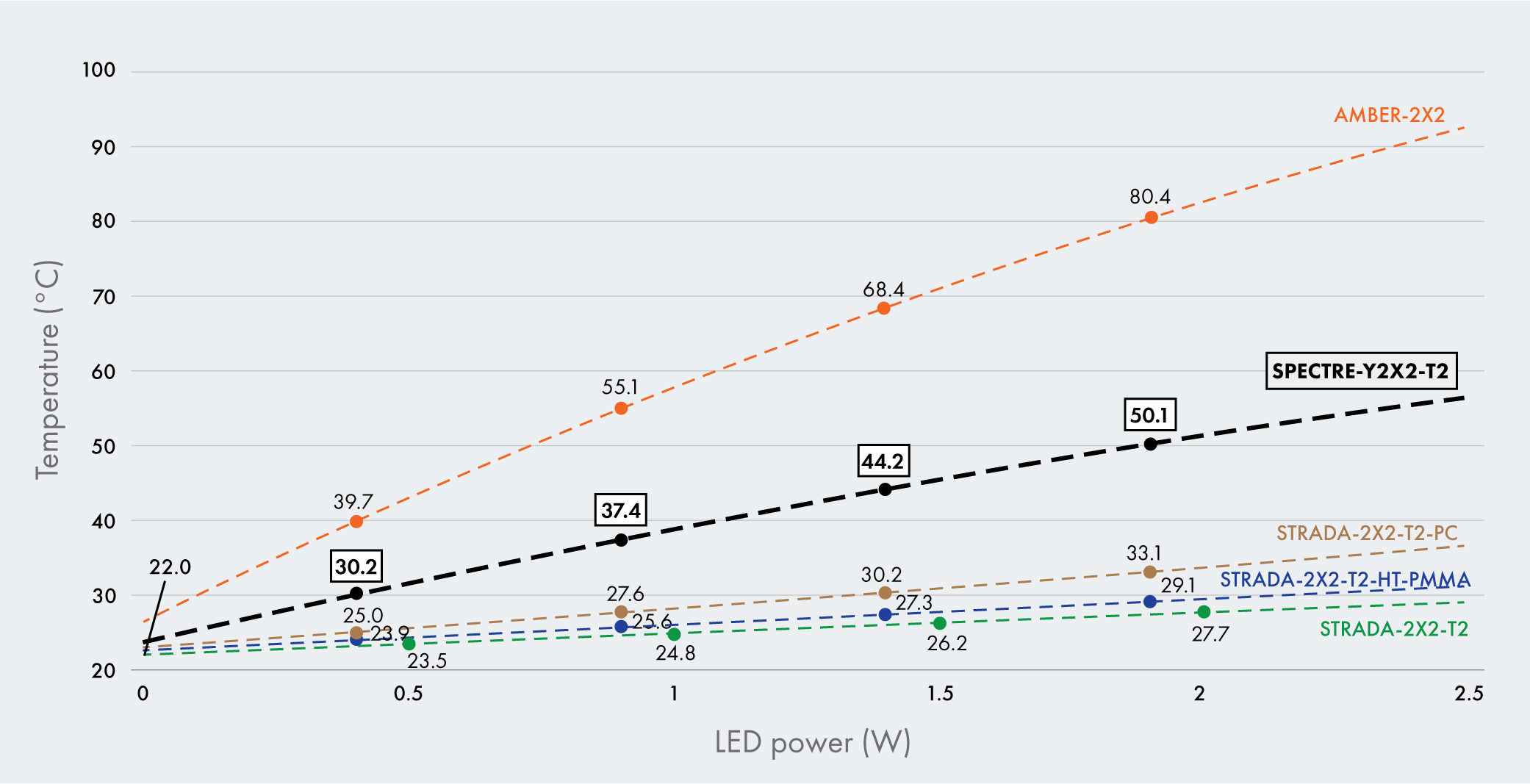
Because less light is absorbed within the optic, less energy is converted into heat. This not only improves thermal stability, but also leaves more thermal headroom for higher operating power and lumen output. See the lens surface hot spot temperature changes with three different LED CCTs below.
Lens surface hot spot temperature changes in relation to LED power – CCT 2200K
Lens surface hot spot temperature changes in relation to LED power – CCT 4000K
Lens surface hot spot temperature changes in relation to LED power – CCT 6500K
For outdoor use, SPECTRE-Y lenses have been tested for UV resistance corresponding to well over 20 years of exposure in European conditions, with only very minor (~6 %) impact on performance.
CRI
Given the reshaped, narrower colour spectrum, colour rendering is necessarily affected.
With SPECTRE-Y lenses, CRI typically decreases from around 70 to around 30–45, similar to AMBER lenses due to the blocked blue content in the spectrum.
For comparison, PC amber LEDs typically achieve around 43 CRI, while pure amber LEDs with a very narrow spectrum are typically in the range of 10–14.
| CRI (Ra) | CRI (Ra) | |
| LED CCT | Luxeon 5050 Square (CRI70) | Luxeon 5050 Square (CRI70) + SPECTRE-Y-2X2-T2 |
| 2200 K | 72 | 46 |
| 2700 K | 71 | 42 |
| 3000 K | 72 | 40 |
| 4000 K | 71 | 35 |
| 5000 K | 72 | 31 |
| 5700 K | 72 | 28 |
| 6500 K | 73 | 29 |
SPECTRE-Y and AMBER – The difference
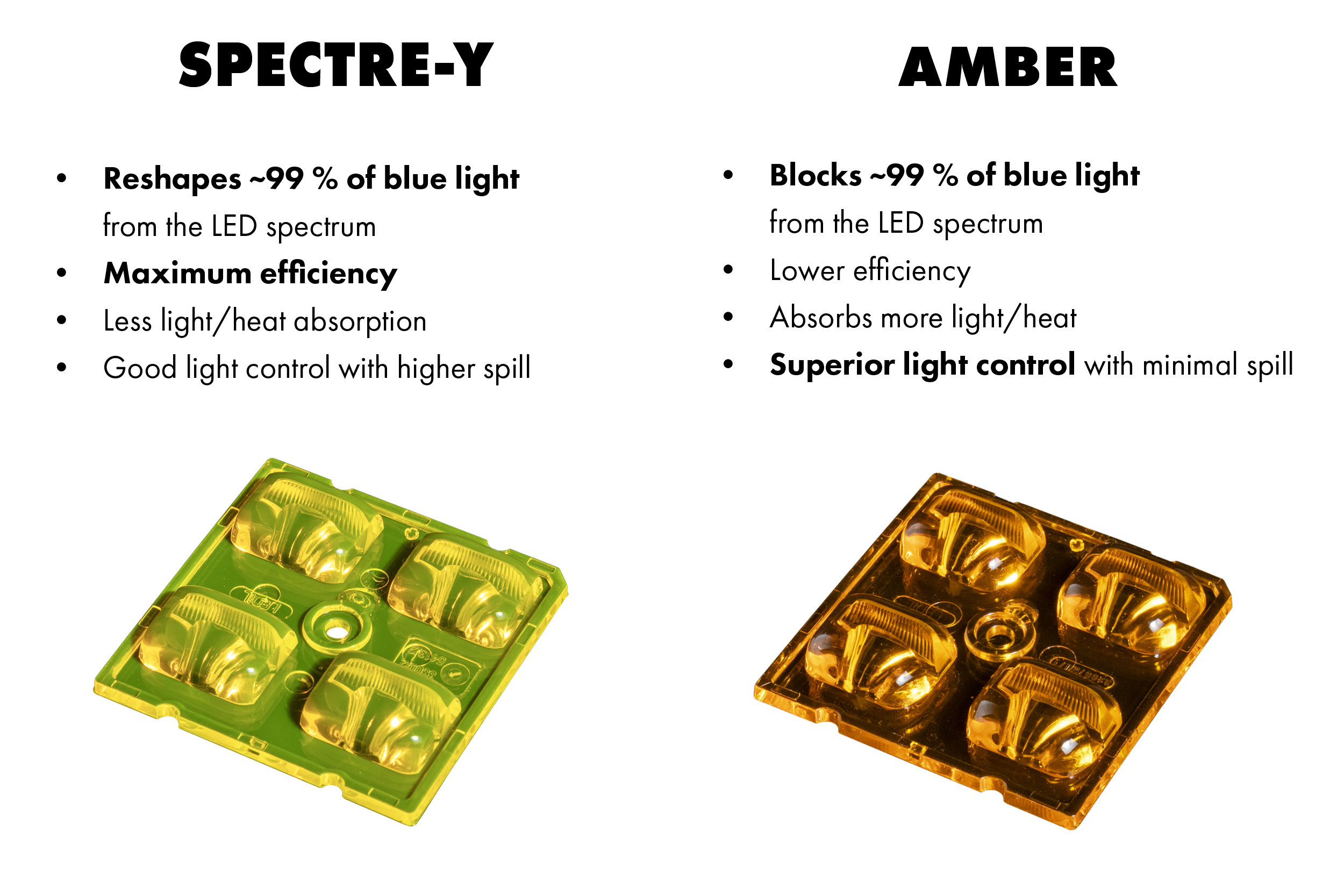
Both solutions reduce blue light but have different advantages by design. The key distinction is in efficiency and spill light control, which depends on the chosen light distribution.
In summary
With SPECTRE-Y the lumens, the efficiency and the performance remain. The blue light does not. The result is a warmer, more natural appearance after the sun sets.
The technology behind SPECTRE is proprietary of LEDiL and currently being patented.